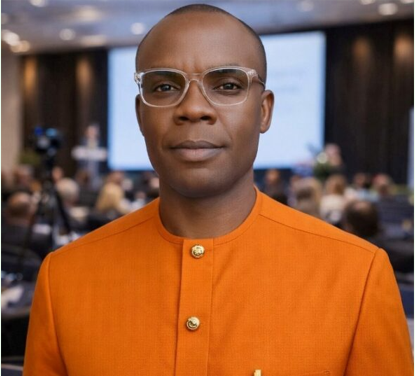
Chiedu Eseadi was born on 5 April 1985 in Ukwu-Oba, Nigeria. He is a Nigerian academic whose career has been shaped by sustained engagement in education, counselling psychology, and mental health research across African and international contexts. His work reflects a steady progression through teaching, research, and academic service, culminating in his current position as a Senior Lecturer in the Department of Educational Psychology at the University of Johannesburg, South Africa.
Eseadi’s formal education was completed at the University of Nigeria, Nsukka, where he obtained a Bachelor of Education degree in 2011, a Master of Education degree in 2016, and a Doctor of Philosophy in Education in 2019. His doctoral research examined career satisfaction, work-related beliefs, and burnout among healthcare professionals, a theme that would later recur in his scholarly output. Earlier schooling included primary education in Delta State and secondary education completed in 2002.
His academic career began at the University of Nigeria, Nsukka, where he served successively as Graduate Assistant, Assistant Lecturer, Lecturer II, and Senior Lecturer in Guidance and Counselling between 2014 and 2024. During this period, he contributed to undergraduate and postgraduate teaching, supervised student research, and participated in departmental and faculty governance. In 2021, he was awarded a Postdoctoral Research Fellowship at the University of Johannesburg, where he continued his research while contributing to postgraduate supervision and collaborative projects. In 2024, he was appointed Senior Lecturer at the same institution.
Eseadi’s teaching experience spans a range of modules in education studies, inclusive education, neurodevelopmental learning, and life orientation. He has also served as a guest senior lecturer in mental health counselling at Universitas Negeri Padang in Indonesia. Beyond classroom teaching, he has supervised undergraduate projects, co-supervised master’s dissertations, and participated in doctoral supervision, particularly in areas related to career development, neurodiversity, and student wellbeing.
Research constitutes a central aspect of his professional life. He has authored and co-authored numerous peer-reviewed journal articles, book chapters, and edited volumes, with research addressing mental health, counselling interventions, career development, neurodiversity, and educational psychology. His publications appear in international journals indexed in major databases, including Web of Science and Scopus. He has also contributed to scholarly books published by international academic presses, addressing topics such as career transitioning among students with disabilities and mental health within institutional and community settings.
His research activity has been supported by competitive grants and fellowships from institutions in South Africa, Nigeria, and Indonesia. Notable among these are funding from the National Research Foundation of South Africa, TETFund in Nigeria, and collaborative research grants with Indonesian universities. His projects have examined issues ranging from career transition for students with special educational needs to mental health interventions and predictors of anxiety among children, young people, and chronically ill patients.
Eseadi’s scholarly contributions have been recognised through several academic distinctions. He is a Y-rated researcher of South Africa’s National Research Foundation, reflecting peer recognition of the quality and impact of his research. He has also been listed among the top education scientists in Africa and has received awards for peer review contributions and postdoctoral research excellence. In 2025, he was selected as a Salzburg Global Fellow and participated as visiting faculty in an international faculty exchange programme at Chandigarh University in India.
In addition to research and teaching, he has held a variety of leadership and service roles within academic institutions and professional bodies. These include membership of faculty transformation and research ethics committees, coordination of doctoral admissions, and participation in international editorial and diversity advisory boards. He has served as an editor or editorial board member for several academic journals and regularly acts as a peer reviewer for international publishers.
Eseadi has also engaged in public scholarship through opinion and feature articles in newspapers and media platforms, addressing topics such as mental health, neurodiversity, inclusive education, and the use of technology in higher education. His conference participation spans multiple countries, where he has presented research findings and contributed to scholarly dialogue in education and psychology.
Overall, Chiedu Eseadi’s career reflects a sustained commitment to academic inquiry, teaching, and service within the fields of educational psychology and mental health. His work is characterised by attention to evidence-based practice, collaboration across institutions and countries, and ongoing involvement in the development of students and early-career researchers.