
Unlike traditional research structures, Public Squares are designed as early-stage, generative spaces – where ideas can be tested, relationships built, and new forms of collaboration developed before taking shape as formal projects or structures.
The initiative is led by Dr Astrid Treffry-Goatley.
Stellenbosch University (SU) has set itself an ambitious goal: to be “Africa’s leading research-intensive university, globally recognised as excellent, inclusive and innovative, where knowledge is advanced in service of society.”
At the heart of this vision is the strategic theme of “Research for Impact” – a commitment to not only generate new knowledge, but ensure that it contributes meaningfully to society. This requires collaboration across academic disciplines.
To illustrate this, SU uses the analogy of a research “cityscape”. Faculties and their academic departments form the historic buildings of disciplinary knowledge. Research centres and institutes make up the newer buildings, bringing expertise together. And above them tower mission-driven entities such as schools – the ‘high-rises’ designed to tackle complex challenges across disciplines.
But a city is not defined only by its buildings. It is also shaped by the spaces in between – the places where people meet, exchange ideas and explore new possibilities. It is in these in-between spaces that SU’s Public Squares take shape.
Spaces of connection
The initiative is led by Dr Astrid Treffry-Goatley, whose work sits at the intersection of culture, health and social change. With a background in participatory and creative research, she is convinced that complex societal challenges cannot be addressed through disciplinary expertise alone, but require collaborative approaches grounded in context and lived experience.
When she joined SU in 2022, she set out to establish a transdisciplinary centre focused on social change and innovation. However, through engagement with colleagues in the Division of Research Development, this idea evolved into a more flexible platform, bringing together researchers, practitioners and policymakers around shared challenges.
Unlike traditional research structures, Public Squares are designed as early-stage, generative spaces – where ideas can be tested, relationships built, and new forms of collaboration developed before taking shape as formal projects or structures.
As Dr Therina Theron, Senior Director for Research and Innovation, explains: “We know that the most complex societal challenges will never be solved through a single academic discipline, nor by academic thinking alone.”
Prof Sibusiso Moyo, Deputy Vice-Chancellor for Research, Innovation and Internationalisation, adds: “Our Public Squares initiative creates space for collaboration and for engagement with partners beyond the university.”
A call for proposals in 2023 drew strong interest, with Public Squares selected through a competitive review process. The teams received funding for three years from SU’s Strategic Fund.
This seed support was intended to help kick-start the initiative, enabling teams to build momentum, develop the capacity needed to drive their longer-term agendas, and leverage additional funding.
Tangible outcomes
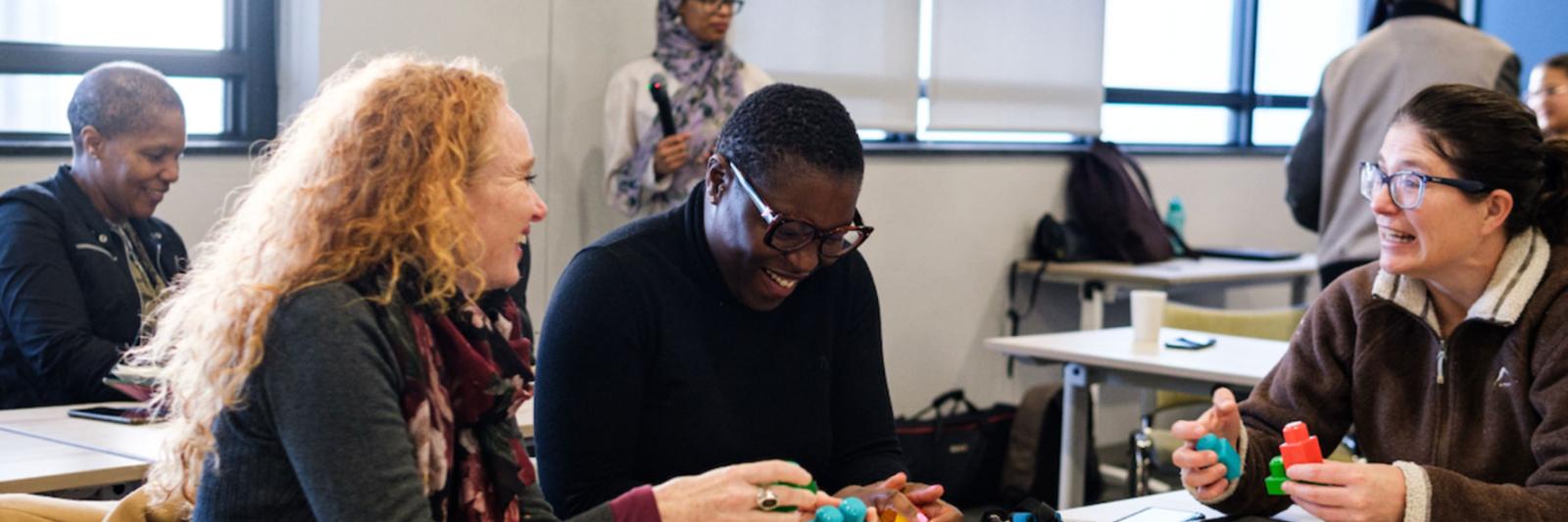
Public Squares are sometimes described as ‘play parks’ or ‘sandpits’ where researchers can explore ideas across disciplinary boundaries. Regular ‘picnics’ provide opportunities for informal engagement.
At the same time, the initiative supports concrete progression, with teams receiving training in engaged research, public engagement, budgeting and grant writing. They also take part in facilitated sessions to develop project ideas.
The initiative was formally launched in March 2024 and is already demonstrating tangible outcomes. This includes:
Twelve transdisciplinary teams established across diverse fields
Over 60 facilitated workshops and engagement sessions
Numerous peer-reviewed publications emerging from collaborative research
External funding secured, including participation in a multi-institutional African consortium valued at around R60 million
Partnerships built with national, provincial, municipal and community stakeholders
Together, these developments point to a growing pipeline – from early-stage ideas to funded research programmes, institutional platforms and societal impact.
Key shift
Across the Public Squares, a key shift is from discipline-led to problem-led research.
“It’s about starting with the issue and asking what we need to understand,” says Treffry-Goatley. “Rather than beginning within a discipline, we build transdisciplinary teams around specific problems.”
The initiative also allows projects to develop at different speeds, depending on readiness and capacity. “Not everyone moves at the same pace,” she explains. “So we make allowances for different rhythms – the fastest projects move forward quicker, while others continue to build more gradually.”
Grounded research
In some cases, the emphasis is on building partnerships and grounding research in specific local contexts. One Public Square, working through a One Health lens, is exploring the links between migration, land use and disease. The team is collaborating with municipal and community stakeholders in Grabouw and Saldanha Bay.
A related perspective is evident in another group’s work on infectious diseases, where researchers from clinical, laboratory and veterinary sciences collaborate with government partners to understand how health risks move across systems.
“At its core is the understanding that human, animal and environmental health are deeply interconnected – a perspective that has gained prominence in the wake of global health crises,” says Prof Wolfgang Preiser, Head of Virology at SU.
New tune
The most recent Public Square – the Health, Arts and Performance Initiative (HAPI) – extends this approach by bringing together researchers and practitioners across disciplines to explore the relationship between health and the creative and performing arts.
“Artists are a vulnerable and often underserved population. There are human rights, social inclusion and health equity issues to take into account,” says Prof Bridget Rennie-Solonen, Head of Woodwinds in SU’s Department of Music.
Looking ahead
Treffry-Goatley says that as the initial Strategic Fund support period nears its end in 2026, attention is turning to the future of Public Squares and how the model can be sustained and expanded.
“While discussions around follow-on funding are ongoing, several elements of the initiative are expected to continue. These include the collaborative approach itself, the networks that have been established, and emerging projects moving towards external funding and institutionalisation.”
She notes that some Public Squares have already secured external partnerships and resources to sustain their work, while others are evolving into more formal structures, such as research centres or long-term programmes. Together, these developments suggest that the initiative is beginning to embed itself within the University’s broader research ecosystem.
There is also growing interest, she adds, in expanding the model – both within SU and through partnerships beyond the institution.
Lessons from the initial phase are informing how future iterations might be structured, including how to support projects at different stages of development and how to strengthen pathways from early collaboration to sustained impact.
Over the next few years, Treffry-Goatley expects Public Squares to continue focusing on complex, cross-cutting challenges – from health and environmental change to social inequality and information integrity – while deepening engagement with partners across government, civil society and communities.
She concludes: “Ultimately, the longer-term ambition is not only to sustain individual projects, but to reshape how research is conceived and conducted – creating more connected, responsive and socially engaged ways of working, both within our University and beyond.”

Latest on